When Do Grizzly Bears Hibernate in Banff? A Month-by-Month Guide
Grizzly bears in Banff generally go into their winter dens in October or November, although some adult males stay out into December or later when they can still find food. They come out in spring: Parks Canada says bears leave their dens between late March and mid-May, with the earliest adult males sometimes about in March and other bears following through April and May. No single date sends every grizzly to sleep or wakes them all up.
That spread matters when you plan a trip to Banff National Park. A November visitor can still meet an active bear, while by January most grizzlies are in their dens. By April, reports of bears back at lower elevations become more common, but a sighting is never guaranteed. For the odds of seeing a bear in each winter month, see our guide to whether you can see bears in Banff in winter.
Parks Canada's grizzly bear profile says grizzlies in the mountain national parks can hibernate for up to six months of the year. Females with cubs are the first to den up, typically in mid-November, while males can stay up "well past Christmas" if they still have food. A Banff study cited in the Government of Canada's 2025 grizzly bear assessment found that bears in the park spent about 4.5 months a year in their dens on average, which shows how much the season varies.
Banff grizzly hibernation calendar
| Month | What grizzlies are typically doing | What it means for a visit |
|---|---|---|
| September | Feeding hard and building fat reserves | Bears are getting ready for winter; keep your distance around food sources. |
| October | Denning can begin; timing varies | Many bears may still be active, especially early in the month. |
| November | Most bears move into their dens; females with cubs around mid-month | Some may still be out, especially adult males. |
| December | Most grizzlies are denned | A late male is possible, but not something to plan a tour around. |
| January | Winter denning | Wild grizzly sightings are exceptionally unlikely. |
| February | Winter denning; cubs born in late January or early February | Mothers are nursing newborn cubs in the den. |
| March | Early emergence can begin, from late March | A few adult males may appear, but it is still winter in the mountains. |
| April | Spring emergence becomes more common | Bear activity at lower elevations increases as food appears. |
| May | More bears are active, including family groups, out by mid-May | Spring wildlife tours make more sense than a winter bear trip. |
This is the general seasonal pattern, not a monthly forecast or the odds of seeing a bear. Each bear's timing depends on food, snow, weather, its sex and whether it has cubs, and where it lives.
While the grizzlies sleep, elk, bighorn sheep and deer stay active. The calendar is for the Twilight Wildlife & Alpine Lakes Sunset Safari, a small-group tour that looks for them through the winter: 4.6★ from 70 reviews, from $142, park entry included.
Why do grizzly bears hibernate in Banff?
The main reason is the lack of food, more than the cold. Banff has a short growing season, and most of what grizzlies eat (berries, roots, green plants and insects) becomes hard or impossible to reach under winter snow. A large animal can't afford to roam the mountains looking for food that isn't there.
So a grizzly spends the warmer months eating and laying down fat. In late summer and autumn it goes into a period of intense feeding called hyperphagia, and the energy stored in its body then carries it through the months in the den.
A denned bear does not get up each day to eat or drink, the way a person wakes after a night's sleep. Its body cuts its energy use sharply and runs on stored fat, and its physiology also helps it hold on to water and muscle through the long stretch without moving.
Do grizzly bears really hibernate?
Yes, hibernation is the accepted word for a bear's winter physiology. You will also hear biologists call it denning or a form of torpor, because bears don't drop their body temperature as far as some small mammals do; the Government of Canada's assessment describes it as "a form of winter sleep with less metabolic depression" than true hibernation.
What matters for a visitor is that a hibernating grizzly is not unconscious or impossible to wake. Bears can rouse, and some leave their dens for short spells, which is why Parks Canada's winter walking advice warns that bears can wake during the winter and asks walkers to stay bear-aware.
How do bears prepare for winter?
- Late summer: bears eat heavily, on berries and whatever else is in season.
- Autumn: they keep building reserves and look for safe denning habitat.
- Going into the den: each bear settles in when the conditions and its own needs make it worthwhile.
- Winter: the metabolism slows and stored energy keeps the bear alive.
- Spring: bears come out as the season turns and start looking for food.
The order is the same every year; the timing is not.
Things to do around Banff while the bears sleep
With the grizzlies denned, winter visitors to Banff National Park head out on guided wildlife safaris for elk and bighorn sheep, ride the Banff Gondola up Sulphur Mountain, join ice walks in Johnston Canyon, and take sightseeing tours to Lake Minnewanka, a frozen Lake Louise and Emerald Lake in Yoho National Park.
Do female and male grizzlies hibernate at the same time?
No. Males, females and family groups often keep different timetables, which is one reason a blanket claim like "all Banff bears are hibernating by 1 November" is misleading.
Pregnant females and mothers with cubs
Pregnant females generally go into their dens early and stay a comparatively long time. Mothers with cubs also need secure winter shelter, and females with newborn cubs are usually among the last bears out in spring. Parks Canada names females with cubs as the first to den, typically in mid-November, and the Government of Canada's assessment says that "pregnant females generally enter dens first and emerge last".
Adult males
Large adult males usually spend the least time in their dens. Some stay out later in autumn or winter when food is still within reach, and males are often the first out in spring. Parks Canada notes that males can stay active well past Christmas if they still have food. That does not make December a good month for a grizzly tour: one unusual bear is not a population you can reliably go and watch.
Young bears and females without new cubs
Subadults and females without newborn cubs tend to fall somewhere in between. When they go in and come out can depend on their body condition, the snow cover, the food supply and the local habitat.
For visitors, one sighting of an adult male in spring doesn't mean "bear season has started" or that every bear is out.
Where do grizzly bears hibernate in Banff?
Parks Canada says grizzlies dig their winter dens into steep slopes with a north or east facing aspect in the subalpine, where deep snow builds up and insulates them against the winter cold.
A typical den is a sheltered chamber reached through an entrance tunnel. The earth around it and the snow on top keep the inside far more stable than the cold air outside. That is a long way from the picture of a bear asleep in an open cave: bears can use other natural shelter, but a den dug into the right kind of slope is typical of Rocky Mountain grizzlies.
Can visitors see a grizzly den?
Don't go looking for an occupied den. Winter dens are sensitive sites, and disturbing a bear can drain its energy reserves or put young cubs at risk. Don't leave the trail to investigate holes or tracks on steep slopes, and never share the exact location of a den you think is in use.
Those same slopes can be avalanche terrain. If you are hiking or snowshoeing, follow the signed closures and trail advice and check Parks Canada's winter safety information before you go.
How long do grizzly bears hibernate in Banff?
The figure you will see most often is up to six months, but not every grizzly spends that long in its den. The Banff study cited in the Government of Canada's 2025 assessment found an average of about 4.5 months a year, and different groups of bears can spend very different lengths of time inside. A late-denning male and a mother with newborn cubs can have very different winters in the same park.
What makes the difference:
- Sex and breeding status: pregnant females and mothers with cubs usually stay in longest.
- Food: a bear that can still find food may stay out later.
- Snow and weather: when the mountain snow arrives and how long it lasts affect both denning and the spring food supply.
- Body condition: a bear's fat reserves decide whether it gets through the winter and, for a female, whether she can raise cubs.
- The individual: bears don't all keep the same timetable, even in similar conditions.
So if one wildlife guide says October to April and another says November to May, both can be describing parts of the same very variable process.
Are grizzly cubs born during hibernation?
Yes. Grizzly cubs are usually born inside the winter den in late January or early February. Parks Canada says a newborn cub weighs about half a kilogram (around one pound), tiny and entirely dependent on its mother.
The mother nurses them for the rest of the denning season on the energy she stored before winter. Parks Canada notes that a pregnancy only goes ahead if she has enough fat to sustain herself and the cubs through hibernation, and that a female who goes into her den leaner than normal may come out with fewer or smaller cubs. By the time the family leaves the den, the cubs weigh around 8 kg (18 lb). Parks Canada's account of grizzly reproduction has the detail.
Why do mothers with new cubs stay in longer?
Newborn cubs aren't ready for mountain spring conditions straight away. Staying in the shelter of the den gives them time to grow and keeps the mother out of harm's way while they are at their most vulnerable.
Once families are out, mothers can be very protective. Never approach or follow a mother and cubs, and never put yourself between them; a telephoto lens is the way to enjoy a distant sighting.
When do grizzly bears wake up in Banff?
Spring emergence usually starts with some adult bears in late March or April and carries on through April and May. Many Banff visitor guides give late April as the time the first bears are often reported in the valleys. These are good planning guides, not a promise for any particular date.
Banff & Lake Louise Tourism says the first bear sightings often come in late April, and that bears commonly use the valley bottoms until around late June, while the snow higher up melts.
Why the valleys? Lower slopes green up first, so a bear that has just come out may feed on the first plants there or look for other early food. That can bring bears close to the roads visitors use, and stopping unsafely or walking towards a feeding bear puts both people and the bear at risk.
Is March too early to see grizzlies in Banff?
For a trip planned around wild grizzlies, yes, March is generally too early. An unusually early male may come out, but plan around the winter scenery and other wildlife.
Is April a good month to see bears?
April is a month of transition. A spring sighting is possible, especially late in the month, but cold, lingering snow and patchy food make an April-only bear trip a gamble. If a grizzly is the main goal, late spring is a more sensible starting point, though no wild encounter can be guaranteed.
Is May better than April?
For a bear-focused trip, May is generally a more practical choice than March or early April, because spring activity is further along. Some tours and access roads may still be on seasonal schedules or affected by snow, so check each tour's actual dates instead of assuming the first bear sighting means every summer attraction is open.
For the bigger picture, see our guide to grizzly bears and wildlife watching in Banff and the best time to visit Banff.
Visiting while the grizzlies are denned
Hibernation changes what a winter trip to Banff can offer, and our other guides cover it in full:
- The chance of a bear in November, December and January and February, month by month.
- Why hibernation does not make a winter trail bear-safe, with bear spray, viewing distances and who to call: winter bear safety in Banff.
- The elk, bighorn sheep, deer, coyotes and birds that stay active all winter: what animals you can see in winter.
- Whether to book a winter wildlife tour or wait for spring, and which tour: Banff's winter wildlife tours compared.
Can you visit Boo the Bear in winter?
Don't assume so. Boo lives at the Kicking Horse Grizzly Bear Refuge near Golden, British Columbia, and the refuge's bear-viewing tours run on a seasonal schedule, separate from the opening times of the ski resort around it.
The refuge is a managed habitat, not a wild bear-watching site, but Boo still follows the natural seasonal cycle and dens through the winter, so a refuge visit is no winter substitute for a wild grizzly tour. If you are planning a spring or summer visit, check the refuge's official opening calendar and the date of any tour from Banff; no 2027 opening date should be treated as confirmed until the operator publishes one. Our guide to Boo and the Kicking Horse refuge and our Banff grizzly bear refuge tour review cover what to compare before you book.
Wildlife Tours That Run Through the Winter
The grizzlies are in their dens, but elk, sheep and deer are not. One tour follows the animals into the evening; the other mixes them with Banff's best-known viewpoints in the morning.
 Winter into spring · wildlife first
Twilight Wildlife & Alpine Lakes Sunset Safari
Park entry is in the price, and the guide goes wherever elk, sheep or deer have been seen that day, finishing around the early winter sunset.
GetYourGuide · ★ 4.6 (70 reviews) · From $142 Check availability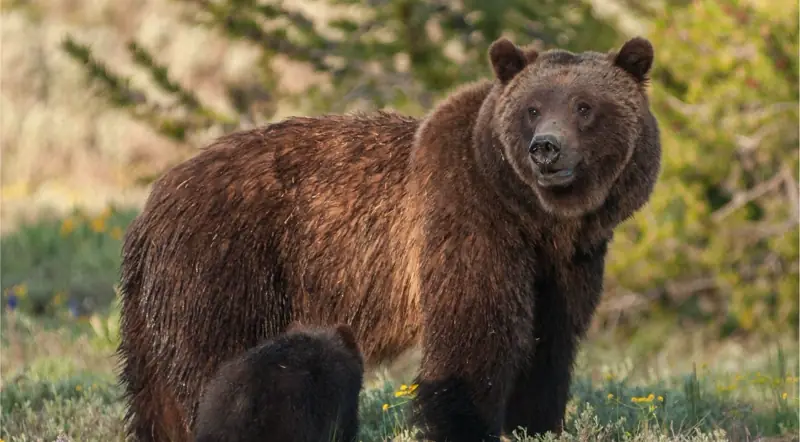 Mornings · all year
Discover Banff & Its Wildlife
A three-hour loop of Bow Falls, the Hoodoos and Lake Minnewanka with a guide who explains how Banff's animals get through the winter. Bought on Viator it can't be refunded.
On Viator · ★ 4.6 (232 reviews) · From US$65 Check availabilityGrizzly Hibernation in Banff: Common Questions
When the bears go in, when they come out, cubs in the den, and what it means for a winter or spring trip.
What month do grizzly bears go into hibernation in Banff?
Usually October or November, but the timing differs from bear to bear. Females with cubs tend to settle into their dens around mid-November, while adult males may stay active later if they can still find food. There is no park-wide cut-off date.
Are all the bears in Banff hibernating by December?
Not necessarily. Most are in their dens, but Parks Canada notes that some males stay active well past Christmas when food is available. That is unusual, and it does not make December a reliable month for seeing bears.
How many months do grizzly bears hibernate in Banff?
Denning can last up to six months. A Banff study cited by the Government of Canada found that bears spent about 4.5 months a year in their dens on average. The length varies with the individual bear, its sex and the conditions.
When do grizzly bears come out of hibernation in Banff?
Parks Canada says bears leave their dens between late March and mid-May. Some adult males come out first, in March or April, and more bears emerge through April and May. Banff's tourism board says the first valley sightings are often reported in late April, but the pattern changes from year to year.
Do grizzly bears hibernate through January and February?
Most do. January and February are the heart of the denning season for Banff's grizzlies. A bear can wake briefly, but seeing a wild grizzly in these months would be exceptional.
Can a grizzly wake up during hibernation?
Yes. Bears can wake, and Parks Canada warns winter walkers that bears may rouse for short periods. Keep following bear-safety advice on snowy trails.
Do grizzly bears give birth while hibernating?
Yes. Cubs are usually born in the den in late January or early February, weighing about half a kilogram. They stay with their mother and nurse until the family is ready to leave the den in spring.
Are black bears and grizzly bears on the same hibernation schedule?
Both usually den through the colder months in Banff, but their timing can differ by species, individual, food supply and weather. Don't assume either species is completely inactive on a particular date.
Can I see a grizzly bear in Banff in March?
It is possible but not something to plan a holiday around. A few adult males may come out early, but treat March as a winter or early-spring visit, not a dependable wild-grizzly trip.
Is May or June better for seeing grizzlies in Banff?
Both make more sense than winter for a bear-focused trip. In May, newly emerged bears often feed in lower areas, and June also brings active feeding. Conditions, access, tour schedules and individual sightings vary, so neither month guarantees a bear.
Should I carry bear spray on winter hikes in Banff?
Yes. Parks Canada recommends carrying bear spray on winter walks and knowing how to use it. Keep it within reach and in date, and remember that bear spray is a deterrent, not something to put on clothing or gear.
Can I find a grizzly bear's den near Banff?
Don't look for or approach an occupied den. Disturbance can harm bears, especially mothers with young, and denning slopes can carry serious winter hazards such as avalanches. Stay on designated routes and watch wildlife only from a safe distance.
The bottom line: plan around the season, not a date
Grizzly hibernation in Banff is a gradual change of season, not a single event. Many bears start denning in autumn, most are inactive through midwinter, and the spring emergence plays out over several weeks as food and conditions change.
If you are visiting between November and February, enjoy Banff's winter wildlife and mountain scenery without expecting a grizzly. If a wild grizzly is the main reason for your trip, plan for late spring or summer, and remember that no sighting can be promised.
Continue planning
Sources and further reading
Checked on 7 November 2026. Bear behaviour, park advisories and operating schedules change from year to year.
- Parks Canada: Grizzly bears in the mountain national parks: den sites, denning and emergence timing, length of hibernation, cub birth and growth.
- Government of Canada: Grizzly bear (western population), 2025 assessment: den entry, the Banff average of 4.5 months in dens, differences between males and females, and winter physiology.
- Banff & Lake Louise Tourism: the best dates to visit Banff and Lake Louise in summer: the first bear sightings of spring and valley-bottom feeding.
- Parks Canada: Winter walking in Banff: winter wildlife safety and equipment.
- Parks Canada: Winter in Banff National Park: avalanche terrain and winter hazards.
- Parks Canada: Safely view wildlife: the 100-metre distance for bears and ethical photography.
- Banff & Lake Louise Tourism: Guided wildlife tours: year-round nature and wildlife experiences.
This page describes biological patterns, not a guaranteed sighting or a fixed opening date for any tour.