Grizzly Bears & Wildlife Watching in Banff: The Complete Guide
For many visitors, no photograph of a turquoise lake compares to the heart-stopping moment of watching a grizzly bear amble across a mountain meadow. Banff National Park is one of the best places in the world to see wildlife in a truly wild setting — grizzlies and black bears, elk, bighorn sheep, mountain goats, moose, and even wolves all make their home here. This guide covers where and when to see them, how to do it safely and ethically, and how to give yourself the best possible chance of an unforgettable encounter.
At a glance
- Grizzly population: around 65 bears in Banff National Park
- Bear season: generally early April through November
- Two peaks: spring emergence (late April–June) and fall hyperphagia (late Aug–Oct)
- Best hours: dawn and dusk, in every season
- Best roads: Bow Valley Parkway (Hwy 1A) and the Icefields Parkway (Hwy 93 N)
- Legal distance: 100 m from bears · 30 m from elk, deer, sheep and moose
The single biggest lever on your sighting odds is being out at the right hour. The small-group Twilight Wildlife & Alpine Lakes Sunset Safari is built around exactly that: it departs into golden hour and works Banff's prime wildlife corridors — Lake Minnewanka, Two Jack Lake, Bow Falls, the Hoodoos and Cascade Ponds — with an adaptive itinerary that reroutes in real time toward the day's active animals. Park entry included; no driving, no parking, and a guide who carries bear spray and holds the legal viewing distances. Rated 4.5★ from 46 reviews, from $142.
The bears of Banff
Banff is home to both grizzly bears and black bears, and seeing one is the wildlife highlight of many trips. Grizzlies are the rarer and more iconic of the two. Parks Canada estimates there are around 65 grizzly bears in the park, part of a threatened population whose broader range is thought to number roughly 60 to 80 individuals given overlapping territories. That scarcity is exactly why a sighting feels so special. These are animals with vast home ranges, living genuinely wild lives.
The park even has celebrity bears. The most famous is a massive dominant male known as "The Boss" (officially Bear 122), a grizzly in his mid-twenties weighing several hundred pounds, often seen along the railway corridor in spring where he feeds on spilled grain and winter-killed animals. He's a reminder that these bears are individuals with distinct territories, histories, and personalities that local guides come to know well.
When to see bears
Bear viewing follows a clear seasonal rhythm tied to hibernation and food. Bears in Banff are generally active from early April through November, and there are two peak windows:
Spring emergence (late April through June). Bears come out of their dens hungry and head to lower elevations where the first green vegetation appears. Large male grizzlies emerge first, often in March or April; females without cubs follow; and females with new cubs, who den the longest, typically appear in early May. This low-elevation feeding makes spring one of the very best times to spot bears, often from valley roads.
Fall hyperphagia (late August through October). As bears prepare for winter, they enter a phase of near-constant eating, foraging up to 20 hours a day to build fat reserves. Berry patches become reliable feeding zones, and the single-minded, fattening bears are more visible and easier to observe.
In both seasons — and really any time — dawn and dusk are the golden hours. Bears and most Banff wildlife are most active in the cool light at the edges of the day. Midday summer sightings happen, but often mean bears have moved to higher elevations following the food. If you are still choosing travel dates, our month-by-month guide to the best time to visit Banff lines these bear windows up against crowds, weather and road openings.
Other experiences worth adding to your itinerary
Wildlife watching pairs naturally with the rest of the park. The Banff Gondola lifts you to a 360° panorama over the Bow Valley from the summit of Sulphur Mountain. The Lake Louise Sightseeing Gondola rides directly over the Whitehorn grizzly corridor, Banff's most-marketed bear-viewing lift. The Kicking Horse Grizzly Bear Refuge near Golden, BC offers a guaranteed close-up with Boo the grizzly, an hour and three-quarters west through Yoho National Park. And an easy e-bike tour, or a drive out to Lake Minnewanka and along the Icefields Parkway, puts you on the quiet edges of the valley where animals actually feed.
Where to see bears and wildlife
A few areas stand out for wildlife viewing:
The Bow Valley Parkway (Highway 1A). This slower, scenic road between Banff and Lake Louise is arguably the park's premier wildlife-viewing route. Bears, elk, and other animals are regularly seen here, especially early and late in the day. Be aware of seasonal restrictions designed to protect wildlife: parts of the road have spring overnight closures and a cycling pilot that limits vehicle access at certain times, so check current Parks Canada rules before you drive.
The Icefields Parkway (Highway 93 North). This stunning highway north toward Jasper passes through prime bear habitat, with frequent sightings along its length. It's a long drive with no services for stretches, so come prepared, but the wildlife (and scenery) rewards are exceptional.
The Lake Louise and Lake Minnewanka areas. Both draw wildlife, from grizzlies on the slopes above Lake Louise to bighorn sheep along the Minnewanka shoreline. Our Lake Minnewanka guide and Lake Louise & Moraine Lake guide cover access, parking and the shuttle system for both.
Wildlife safety: the rules that matter
Watching wildlife is a privilege that comes with real responsibility, for your safety and for the animals' survival. Parks Canada's rules are clear and non-negotiable:
- Keep 100 metres (about 10 bus lengths) away from bears, wolves, cougars, and coyotes.
- Keep 30 metres (about 3 bus lengths) away from elk, deer, sheep, and moose.
- Carry bear spray, keep it immediately accessible (on your belt or pack strap, not buried in your bag), and check the expiry date. It's a last-resort tool with an effective range of only a few metres, so it must be within instant reach.
- Make noise as you hike, call out regularly, and travel in groups (four or more is safest) to avoid surprising a bear.
- Keep dogs leashed and store food in bear-resistant containers, mandatory in Banff from April 1 to November 15.
If you encounter a bear: Stay calm. Do not run, running can trigger a chase response. Speak in a calm, firm voice, make yourself look large, and back away slowly while keeping the bear in sight. Ready your bear spray as a last resort. Report any sighting to Banff Dispatch so rangers can manage the area.
At "bear jams" (roadside crowds around a bear): Ideally, don't stop. If you do, stay in your vehicle, use your hazard lights, and never crowd, feed, or block the animal. Habituating bears to humans and roadsides is dangerous for everyone, and ultimately deadly for the bear. The grim saying among rangers holds true: "a fed bear is a dead bear."
Beyond bears: the rest of Banff's wildlife
Bears get the headlines, but Banff teems with other remarkable animals:
- Elk are commonly seen around the town of Banff and in the valleys. In fall, bull elk enter the rut and become aggressive — give them extra space and never get between a bull and his harem.
- Bighorn sheep frequent rocky slopes and roadsides, especially around Lake Minnewanka and the mountain passes.
- Mountain goats cling to high, steep terrain, often visible along the Icefields Parkway.
- Moose, though less common, inhabit wetlands and willow flats.
- Wolves are elusive and thrilling to spot, most often in the Bow Valley.
- Deer, coyotes, and smaller creatures round out a rich ecosystem.
The same distance rules apply to all of them, and the same golden hours — dawn and dusk — offer the best odds.
Ethical wildlife viewing
How you watch matters as much as what you see. Responsible viewing keeps animals wild and safe:
- Use a telephoto lens to get "close" without physically closing the distance.
- Never feed or bait wildlife — it's illegal, harmful, and often fatal for the animal.
- Don't follow or pursue an animal that's moving away; let it set the terms.
- No drones. They harass wildlife and are prohibited in national parks.
- Stay in your vehicle at roadside sightings and keep moving when you can.
Every ethical choice you make helps ensure these animals — and the chance to see them — endure for future visitors.
Why go with a guide
Seeing a grizzly in the wild is partly luck, but a knowledgeable local guide dramatically improves your odds while keeping the experience safe and responsible. Guides track where wildlife has recently been active, understand animal behaviour and seasonal patterns, know the best viewing times and locations, and carry the expertise (and bear spray) to handle any situation calmly. They also ensure the viewing is done ethically, at proper distances, without stressing the animals.
A guided wildlife tour turns a hopeful drive into an informed search led by someone who reads the landscape for a living, and who can tell you the stories of individual bears, the ecology of the valley, and the subtle signs of wildlife you'd never notice on your own. For anyone whose dream is to see a grizzly bear in Banff, going with an expert is the single best way to make it happen safely.
Guided Wildlife Experiences in Banff
One works the valley roads at dusk from a vehicle; the other walks you into bear country on foot. Both put a bear-spray-carrying expert between you and the animals, and both hold the legal viewing distances.
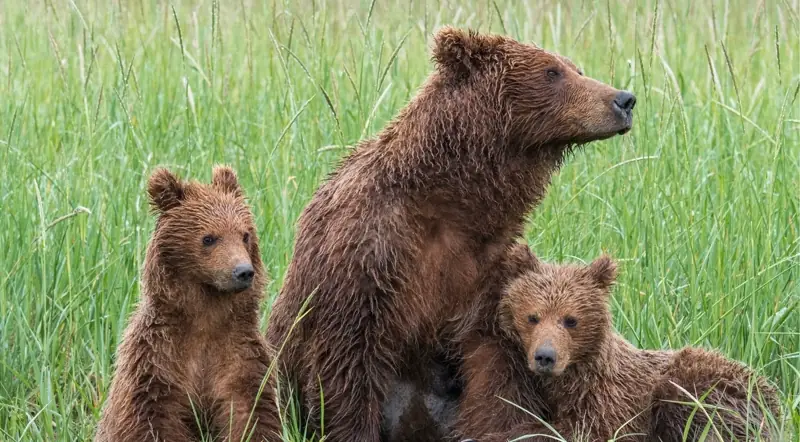 From a vehicle · dusk
Evening Wildlife Sunset Safari
Departs into the golden hour and works Lake Minnewanka, Two Jack Lake, Bow Falls, the Hoodoos and Cascade Ponds, rerouting in real time toward the day's active animals — elk, deer, bighorn sheep and, with luck, a wild grizzly.
Featured: Twilight Wildlife & Alpine Lakes Sunset Safari · ★ 4.5 (46 reviews) · From $142 Check availability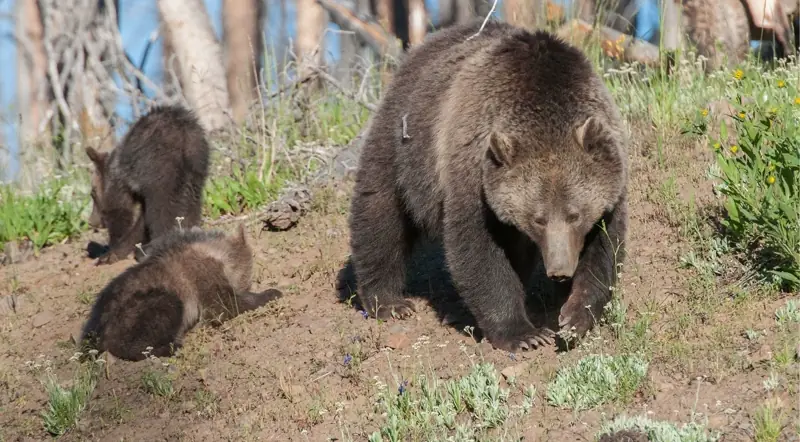 On foot · Banff & Kananaskis
Bear-Country Guided Wildlife Hikes
The most immersive way to understand grizzly behaviour and habitat — a wildlife-focused guide who carries bear spray, reads sign on the trail, and enforces the noise-and-group-size rules that stop you surprising a bear. A young listing: read the most recent reviews before you book.
Featured: Bear Country Wildlife-Focused Guided Hikes · ★ 4.9 (12 reviews) · From $134 Check availabilityMaking It Happen: Five Steps to a Banff Wildlife Encounter
Stack the odds in your favour, then let the animals set the terms. Above all, remember that these are wild animals in their own home — watch them with respect, keep your distance, and let them stay wild.
Time Your Trip
Aim for a bear-viewing peak — late spring (late April to June) or early fall (late August to October), when bears feed at low elevations and forage up to 20 hours a day.
Focus on Dawn and Dusk
Animals are most active in the cool light at the edges of the day. Midday sightings happen, but often mean the bears have followed the food to higher elevations.
Explore the Prime Routes
The Bow Valley Parkway and the Icefields Parkway are the two best wildlife roads in the park — respecting all seasonal restrictions, including the spring overnight closures on Highway 1A.
Come Prepared
Bear spray within instant reach and in date, binoculars or a telephoto lens for ethical distance, and the safety rules committed to memory before you set out.
Consider a Guided Tour
A guide maximises both your odds and your safety — tracking recent activity, reading the landscape, and keeping the encounter at a distance that keeps the animal wild.
Watch With Respect
Do all of the above and a Banff wildlife encounter will be one of the most profound experiences of your entire trip — a genuine glimpse into one of the last great mountain wildernesses on Earth.
Banff Wildlife Watching: Common Questions
Practical answers on populations, seasons, distances, and what to do when you actually meet a bear.
How many grizzly bears live in Banff National Park?
Parks Canada estimates there are around 65 grizzly bears in Banff National Park, part of a threatened population whose broader range is thought to number roughly 60 to 80 individuals given overlapping territories. That scarcity, combined with the enormous home ranges these bears use, is exactly why a wild sighting feels so special.
What is the best time of year to see bears in Banff?
Bears in Banff are generally active from early April through November, with two peak viewing windows. Spring emergence runs late April through June, when bears come out of their dens hungry and feed on the first green vegetation at low elevations. Fall hyperphagia runs late August through October, when bears forage up to 20 hours a day on berries to build fat reserves before winter. In both seasons, dawn and dusk are the golden hours. See our best time to visit Banff guide for the full month-by-month picture.
Where are the best roads for wildlife viewing in Banff?
The Bow Valley Parkway (Highway 1A) between Banff and Lake Louise is arguably the park's premier wildlife-viewing route, with regular bear and elk sightings early and late in the day — check current Parks Canada rules first, as parts of the road have spring overnight closures and a cycling pilot that limits vehicle access at certain times. The Icefields Parkway (Highway 93 North) toward Jasper passes through prime bear habitat, and both the Lake Louise and Lake Minnewanka areas draw wildlife reliably.
How far away do I have to stay from wildlife in Banff?
Parks Canada's rules are non-negotiable: keep 100 metres — about 10 bus lengths — away from bears, wolves, cougars and coyotes, and 30 metres — about 3 bus lengths — away from elk, deer, sheep and moose. Carry bear spray on your belt or pack strap where you can reach it instantly, check its expiry date, make noise as you hike, travel in groups of four or more, keep dogs leashed, and store food in bear-resistant containers, which is mandatory in Banff from April 1 to November 15.
What should I do if I encounter a bear?
Stay calm and do not run, running can trigger a chase response. Speak in a calm, firm voice, make yourself look large, and back away slowly while keeping the bear in sight. Ready your bear spray as a last resort; it has an effective range of only a few metres, so it must be within instant reach. Report any sighting to Banff Dispatch so rangers can manage the area.
Should I stop at a bear jam?
Ideally, don't stop. If you do, stay in your vehicle, use your hazard lights, and never crowd, feed or block the animal. Habituating bears to humans and roadsides is dangerous for everyone and ultimately deadly for the bear — the grim saying among rangers holds true: a fed bear is a dead bear.
Is a guided wildlife tour worth it in Banff?
Seeing a grizzly in the wild is partly luck, but a knowledgeable local guide dramatically improves your odds while keeping the experience safe and responsible. Guides track where wildlife has recently been active, understand animal behaviour and seasonal patterns, know the best viewing times and locations, carry bear spray, and ensure viewing happens at proper distances without stressing the animals. For anyone whose dream is to see a grizzly bear in Banff, going with an expert is the single best way to make it happen safely.