Can You See Bears in Banff in Winter? What to Expect from November to February
You can see a bear in Banff in winter, but it is very unlikely, especially in January and February. Most of the park's grizzlies and black bears spend the coldest months in their dens. A few stay active late in the year or wake for a short time, so winter never makes a bear encounter impossible. If you are visiting between November and February, don't plan the trip around a grizzly. Look instead for elk, bighorn sheep and deer, which stay active all winter, or book a guided wildlife-and-sightseeing tour that you would enjoy even without a bear.
Bears in Banff, month by month
- November: possible early in the month, then falling fast as bears den
- December: very unlikely; a few males can stay out past Christmas
- January and February: extremely unlikely; nearly every bear is in its den
- Back out: late March to mid-May, big males first (Parks Canada)
- What you can see: elk, bighorn sheep, deer, coyotes, and now and then a wolf
- On foot: carry bear spray all winter; denning bears can wake
The Twilight Wildlife & Alpine Lakes Sunset Safari is a small-group evening wildlife tour with an itinerary the guide changes on the day to follow the animals, and park entry is included. In winter, expect elk, deer and sheep, not bears. Rated 4.6★ from 70 reviews, from $142. It is timed to sunset, so winter departures leave much earlier than summer ones; check the start time for your date.
Are bears active in Banff in winter?
| Month | Chance of seeing a wild bear | What to expect |
|---|---|---|
| November | Possible, but falling | Some bears, mostly adult males, are still feeding before they den. |
| December | Very unlikely | Most bears are in dens; a few stay active if they can still find food. |
| January | Extremely unlikely | Nearly all bears are denning. An awake bear is an exception, not a sightseeing opportunity. |
| February | Extremely unlikely | Bears are generally still in their dens. They come out later in spring. |
These are expectations, not measured monthly sighting odds. What bears do changes with food, weather, the individual animal and the year.
Parks Canada says a grizzly can hibernate for up to six months. Females with cubs are usually among the first to den, often in mid-November, while some adult males stay active well past Christmas if they can find food. That is why an odd winter sighting happens without winter ever becoming a bear-viewing season.
When do grizzly bears hibernate in Banff?
Grizzlies get ready for winter by eating hard through late summer and autumn, building the fat that carries them through months when food is scarce and snow covers their range (our guide to how grizzly hibernation works has the detail). Each bear dens on its own timetable; they don't all vanish on 1 November:
- Females with cubs usually den earlier than large adult males.
- Adult males keep roaming while there is food to find.
- Local snow, temperature and food all shift the timing.
- A denning bear can wake or come out briefly, so winter never means zero bear activity.
Grizzlies dig their dens in sheltered mountain terrain, and the snow on top insulates them from the much colder air outside. Their metabolism slows and they live mostly on stored fat. Pregnant females give birth in the den in late January or early February, and the tiny cubs stay with their mother until the family comes out in spring. You won't see those cubs on a midwinter trip.
Never try to find, approach or photograph a bear's den. A winter wildlife outing should never disturb a denning animal.
What to book in Banff while the bears sleep
Winter in Banff National Park is still a wildlife trip, just a different one. Guided wildlife safaris around the town of Banff, Lake Minnewanka and the Vermilion Lakes look for elk, bighorn sheep and deer. The Banff Gondola runs up Sulphur Mountain all winter, and the Johnston Canyon ice walk and a soak at the Banff Upper Hot Springs fill the short days.
Can you see bears in Banff in November?
November is the likeliest of the four winter months for a chance bear sighting, mainly early in the month, but it is still a poor choice for a trip whose main purpose is watching grizzlies. In early November some bears are still looking for the last good food of the year; by late November many are already in their dens. An early snowfall doesn't mean every bear is asleep, and a mild spell doesn't mean any will be visible.
If you are travelling in November:
- Book a wildlife tour for winter scenery and the animals that stay active, not for bears.
- Ask the operator which tour runs on your actual date; some summer bear tours have finished for the season.
- Look for elk, deer and bighorn sheep from safe roadside viewpoints or with a local guide.
- Treat any bear as an unexpected bonus.
So the useful November question is which wildlife outings you would enjoy even if you see no bear at all.
Can you see bears in Banff in December?
A grizzly in Banff in December is possible but very unusual. Parks Canada notes that some male grizzlies stay active past Christmas when food allows. That is an exception, and no tour can offer it reliably. In December, plan for winter sightseeing and the animals that are far more likely to be out: snowy valleys, frozen waterfalls and mountain views make a good day even when no large animal appears.
December also has the shortest days of the year. Plan a sensible daytime route and skip the after-dark drives on remote roads in the hope of wildlife: animals are hard to see in poor light, and winter roads make stopping and driving harder. If you want to see a grizzly specifically, move the trip to late spring or early summer; a December tour won't change the odds.
Can you see bears in Banff in January or February?
Don't expect to see a wild grizzly or black bear in Banff in January or February. These are the core denning months. A bear can wake for a while, but there is no dependable place, time of day or guided winter "grizzly safari" that makes a sighting likely.
They are still good wildlife months, with different species. Elk and deer use lower-elevation habitat, bighorn sheep use open or windswept slopes, and wolves and coyotes stay active, although you can't predict where they will be. In February the longer days make it easier to fit scenic stops into one day, but they do not mean Banff's bears are out of hibernation.
Do black bears hibernate in Banff too?
Yes. Both black bears and grizzlies den through the winter in the Banff area, and neither is a winter attraction. They are different species with different looks and habits, but both depend on seasonal food and winter denning, so plan on a December black bear no more than on a December grizzly.
Don't name a bear by its fur colour alone: black bears can be brown or cinnamon. If you are lucky enough to see one from a safe distance, enjoy watching it and stay put; getting closer to check the species is never worth the risk. For Banff's wild bears in the active season, read our grizzly bear and wildlife watching guide.
Which animals can you see in Banff in winter?
Winter is a better time to look for the animals that stay active all year than to search for denning bears. You might see:
| Animal | What to expect in winter | Keep in mind |
|---|---|---|
| Elk | One of the likelier large animals in the valleys | Keep well clear of elk near roads and in town. |
| Bighorn sheep | Possible on open slopes and beside roads | Never walk up to them for a photograph. |
| Mule deer and white-tailed deer | Possible along low forest edges and valleys | Stay alert while driving. |
| Coyotes | Active all year; seen now and then | Never feed or call them in. |
| Wolves | Active all year, but elusive and hard to find | A sighting is a bonus, not a tour result. |
| Red squirrels and winter birds | Often easier to watch near busy walking areas | Give small animals space too. |
Moose live in the wider region too, but you can't count on seeing one around Banff, and a tour that lists moose or wolves is not promising either. Winter wildlife watching is about seeing animals go about their day: a herd of elk feeding quietly below a snowy ridge can be the best moment of the trip. Our guide to Banff winter wildlife tours compares the guided options.
Are there winter wildlife tours in Banff?
Yes. Several guided wildlife-and-sightseeing tours run through the winter, and they suit visitors who want an introduction to the animals and the landscape without planning every stop. Our guide to the best winter wildlife tours compared sets out their prices, pickups and formats.
Discover Banff & Its Wildlife, run by Discover Banff Tours, is a three-hour morning tour that operates year-round, 8:30 to about 11:30 a.m., with pickup from most Banff hotels. Its stops include Bow Falls, Surprise Corner, the Hoodoos Viewpoint and Lake Minnewanka, with hot chocolate and a maple cookie in winter. The operator says plainly that it does not guarantee wildlife. It is rated 4.6/5 from 232 reviews on Viator, where it is sold as non-refundable; booked on the operator's own site it has free cancellation up to 72 hours ahead.
Explore Banff & Wildlife in Winter is a private tour by Explore Banff Tours that mixes viewpoints with looking for active wildlife, and its description warns that bears will likely not be visible in winter. The same company's shared Explore Banff + Wildlife tour sells by the seat on Viator, rated 4.9/5 from only 11 reviews, so read the recent ones before you book.
A good winter wildlife tour usually has:
- A local guide who can explain tracks, behaviour and habitat.
- A heated vehicle between scenic areas.
- Stops at safe, easy viewpoints when conditions allow.
- Honest expectations about which animals may appear.
- Enough sightseeing that the morning is a good one even if the wildlife stays hidden.
Before you book, check the exact winter operating dates, the departure point, transport, the cancellation policy, and whether the tour is mainly a nature tour or a general sightseeing tour. Availability and prices change.
Where to look for winter wildlife around Banff
You don't need the backcountry to enjoy Banff's winter wildlife. The established scenic roads and viewpoints show you the landscape and keep the distance animals need.
Around the town of Banff
The town and the valley around it are a good start for visitors with little winter driving experience. Wildlife uses the lower-elevation habitat here, and animals can turn up without warning near roads and buildings. Never walk up to an elk or deer because it looks used to people.
Lake Minnewanka
Lake Minnewanka and the viewpoints near it feature on several guided wildlife-and-sightseeing tours, and the area is beautiful in winter whether or not an animal shows up. Parks Canada closes the western section of the Minnewanka Loop Road to driving from November to May to protect a wildlife corridor, so check your route before you drive there yourself.
Scenic roads and pullouts
Banff's valleys and parkways can show you elk, sheep or deer on the way to somewhere else. Don't turn a winter drive into an animal chase. Stop only in designated, safe pullouts, never block the road, and obey every posted closure and no-stopping sign.
Should you search for a bear den?
No. Dens are not visitor attractions, and looking for one can disturb a resting bear. If you see large tracks in the snow, don't follow them toward the animal. Parks Canada specifically tells winter visitors not to follow wildlife tracks.
Is it safe to hike in Banff in winter if bears are hibernating?
Bear activity is usually much lower, but winter is not bear-free. Parks Canada tells winter walkers to stay alert, make noise and carry bear spray, because denning bears can wake for short periods. On a winter walk or snowshoe outing:
- Carry bear spray where you can reach it and know how to use it. Follow the maker's instructions, including those for freezing temperatures.
- Make your presence known, especially where you can't see far ahead, so you don't startle an animal.
- Stay on suitable, open trails and check the latest conditions and closures.
- Never follow animal tracks, approach a den or walk toward a carcass.
- Keep dogs on a leash and children close.
- Give wildlife space: Parks Canada asks for at least 100 m (330 ft) from bears, wolves, coyotes and cougars, and 30 m (100 ft) from elk, deer and bighorn sheep.
- If you meet a bear, don't run. Stay calm, talk calmly if it knows you are there, and back away slowly when it is safe. Read Parks Canada's full encounter advice before you set out.
For most winter visitors the bigger everyday hazards are ice, extreme cold, fast-changing weather and avalanches. A short-looking mountain walk can cross avalanche terrain, so read Parks Canada's trail reports and winter safety advice before assuming a summer trail is safe in January. Check Parks Canada's winter safety guidance and the Banff closures and restrictions page for current warnings.
Can you see Boo at Kicking Horse in winter?
No. Boo, the resident grizzly at the Kicking Horse Grizzly Bear Refuge near Golden, BC, dens through the winter like Banff's wild bears, and refuge staff monitor him while he sleeps. Skiing at Kicking Horse in winter doesn't mean you can visit his refuge. The refuge tours run in summer only, and the 2026 season ran May 30 to September 27; check the confirmed dates for next year before you plan around him. Our guide to Boo and the Kicking Horse refuge covers tickets and timing, and the homepage compares the summer refuge visit with wild-bear tours.
When is the best time to see grizzly bears in Banff?
If a wild grizzly is your top priority, choose your dates by the bear season, not the ski season. Late spring and early summer are good: once out of their dens, bears look for food where the snow has gone and new plants are growing. Early autumn is good too, when bears feed hard to build fat for the winter.
No season, road or guide can guarantee a wild sighting. Bears range widely, and not disturbing them matters more than any photograph. Our best time to visit Banff guide compares the months for weather, crowds and access.
Two Ways to Plan Around Banff's Denning Season
Book a wildlife tour for the animals that stay active this winter, or start planning a spring or summer trip for the bears themselves.
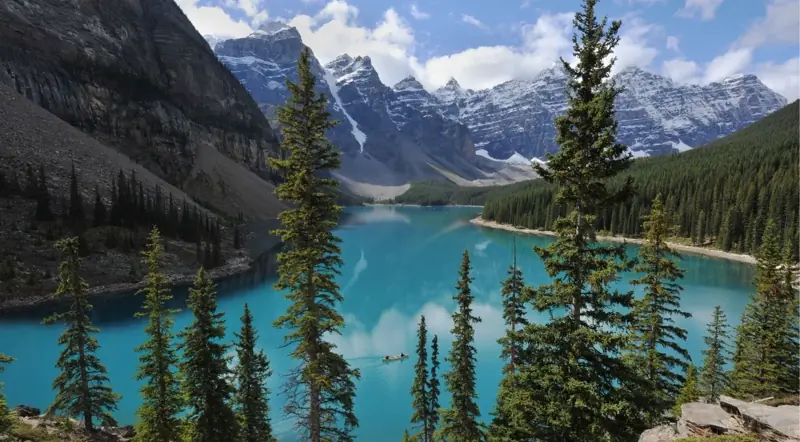 This winter · elk, deer & sheep
Twilight Wildlife & Alpine Lakes Sunset Safari
One to three small groups share each departure, park entry is included, and the guide picks the stops on the day to follow the animals. Someone who knows the valleys does the driving on icy roads.
Featured: Twilight Wildlife & Alpine Lakes Sunset Safari · ★ 4.6 (70 reviews) · From $142 Check availability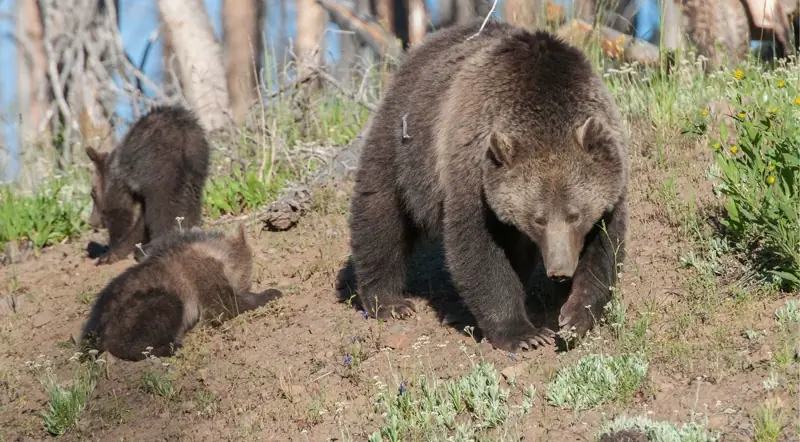 Spring & summer · wild grizzlies
Plan a Trip for the Bears
Where and when Banff's grizzlies feed once they are out of their dens, which roads and hours give the best odds, and how to watch them from a safe distance.
Our guide: Grizzly Bears & Wildlife Watching in Banff Read the guideBears in Banff in Winter: Common Questions
December grizzlies, winter bear spray, February cubs, and whether any month gives you both snow and bears.
Are there grizzly bears in Banff in December?
Yes, grizzlies live in Banff year-round, but most are in their winter dens by December. A few males stay active later if they can still find food; Parks Canada says some are out well past Christmas. Seeing one on a December holiday is highly unlikely.
Do bears in Banff hibernate all winter?
Most bears spend most of the winter in dens, and Parks Canada says a grizzly can hibernate for up to six months. They can still wake or leave the den briefly, and denning dates vary from bear to bear, so do not assume an area is free of bears just because there is snow.
Are bears active in Banff in November?
Some are, especially early in the month. Females with cubs usually den first, often in mid-November, while some males stay out later. November is possible for a bear sighting but unreliable.
Can you see bears at Lake Louise in winter?
You should not expect to. Bears live in the wider Lake Louise area, but in January and February they are generally in their dens. Go to Lake Louise in winter for the mountain scenery and the winter activities.
Are winter wildlife tours in Banff worth it?
They can be, if you want guided sightseeing, a guide who explains the park's animals, and a chance of seeing elk, deer or bighorn sheep without driving winter roads yourself. Choose a tour that does not promise bears and that you would enjoy even if no animals appear.
Should I carry bear spray in Banff in January?
Yes, if you are walking or snowshoeing in bear habitat. Parks Canada recommends carrying bear spray in winter and knowing how to use it, because bears can wake from their dens for short periods.
Can you see bear cubs in Banff in February?
You should not expect to. Grizzly cubs are born in the den in late January or early February and stay there with their mother until the family emerges in spring, which Parks Canada puts between late March and mid-May.
Which month is best for a Banff trip if I want both snow and bears?
No month reliably offers both deep-winter conditions and bear viewing. Spring can still bring snow to the mountains while the first bears emerge, but conditions and sightings vary. If a grizzly sighting matters most, plan for the active bear season and accept less snow.