Banff Itineraries: The Perfect 1-Day, 5-Day & 7-Day Plans
Banff National Park offers more than any visitor can see in a single trip, which makes planning both exciting and slightly daunting. How do you fit the iconic lakes, the gondola, the wildlife, the scenic drives, and the neighbouring parks into the time you have, without spending your whole holiday driving in circles? This guide lays out proven itineraries for 1-day, 5-day, and 7-day trips, built around smart geography so you spend your time experiencing the park rather than backtracking across it.
At a glance
- The core principle: build each day around one geographic cluster
- 1 day: pick a focus — the iconic lakes, or Banff town and wildlife
- 5 days: town · Lake Louise & Moraine · wildlife & Johnston Canyon · Icefields Parkway · Yoho or Minnewanka
- 7 days: add Boo at the Kicking Horse refuge, plus a big hike or a flex day
- Book ahead: Moraine Lake shuttle, gondola, cruises and guided tours
- Free park entry: June 19 – September 7, 2026 under the Canada Strong Pass
Almost every itinerary below runs into the same constraint: parking. The hop-on-hop-off day pass covers Johnston Canyon, Moraine Lake, Lake Louise and the Lake Louise Gondola stop in one ticket, which solves the access problem on Day 2 and Day 3 without a car. Rated 4.9★ from 327 reviews, from $90.
The guiding principle: cluster by geography
Banff's attractions fall into natural geographic clusters, and the secret to a good itinerary is to group them so you're not crisscrossing the park:
- The town cluster: Banff townsite, the Banff Gondola (Sulphur Mountain), the Upper Hot Springs, Bow Falls, Cave and Basin, and Vermilion Lakes, all close together.
- The western lakes cluster: Lake Louise, Moraine Lake, and neighbouring Yoho National Park (Emerald Lake, Takakkaw Falls).
- The northern drive: the Icefields Parkway toward Jasper, a full-day journey of its own.
- The eastern loop: Lake Minnewanka, Two Jack Lake, and the Bow Valley Parkway for wildlife.
Build each day around one cluster, and everything flows.
A quick planning reminder before the itineraries: Moraine Lake cannot be reached by private vehicle, so any day involving it requires a pre-booked Parks Canada shuttle, a Roam Super Pass, or a guided tour. Book those well ahead. And if your trip falls between June 19 and September 7, 2026, park entry is free under the Canada Strong Pass.
Worth building into your itinerary
The experiences below slot straight into the day plans that follow. The Banff Gondola up Sulphur Mountain is the anchor of any town day. A wildlife safari along the Bow Valley Parkway and Lake Minnewanka is the classic dawn or dusk add-on. The Kicking Horse Grizzly Bear Refuge near Golden, BC is the natural Day 6, reached through Yoho National Park past Takakkaw Falls and Emerald Lake. And an e-bike tour or the Lake Louise Sightseeing Gondola fills a half-day beautifully.
The perfect 1-day itinerary
With just one day, you have to choose a focus. Here are two strong options depending on your priorities.
Option A: The iconic lakes
If you're here for those famous turquoise lakes, dedicate your day to them.
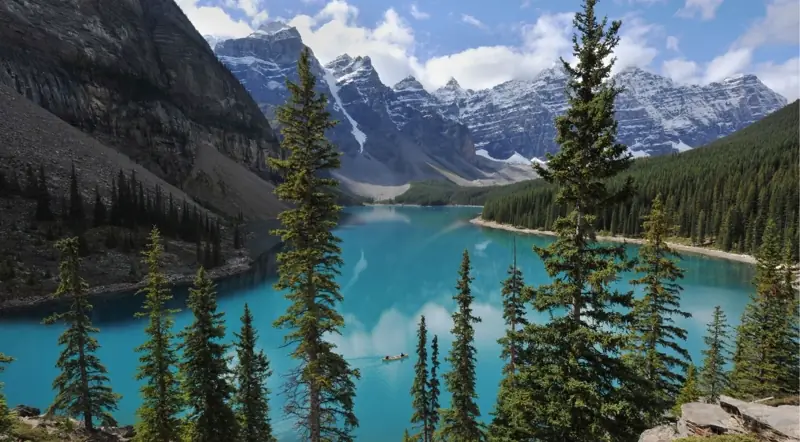
- Early morning: Catch the earliest Parks Canada shuttle from the Lake Louise Park and Ride out to Moraine Lake, arriving before the crowds. Climb the Rockpile viewpoint for that classic Valley of the Ten Peaks panorama and walk the shoreline.
- Late morning: Take the free Lake Connector shuttle over to Lake Louise. Stroll the lakeshore path, rent a canoe, or hike partway toward the Lake Agnes Tea House.
- Afternoon: Shuttle back, then visit Johnston Canyon (reachable by Roam Route 9) for the catwalk hike to the waterfalls.
- Evening: Return to Banff for a well-earned dinner in town.
Option B: Banff town and wildlife
If you'd rather sample a bit of everything close to town, this loop delivers.
- Morning: Ride the Banff Gondola up Sulphur Mountain right at opening for clear views and thin crowds. Walk the summit boardwalk.
- Midday: Head to Lake Minnewanka for the interpretive boat cruise or a drive around the scenic loop, watching for bighorn sheep.
- Afternoon: Stop at Bow Falls and Surprise Corner for the classic view of the Fairmont Banff Springs, then explore Banff Avenue.
- Evening: Soak at the Upper Hot Springs as the light fades, the perfect end to a full day.
The 5-day itinerary
Five days lets you cover the essentials without rushing, sampling every cluster.
Day 1, Banff town and the gondola. Ease in with the town cluster. Ride the Banff Gondola, wander Banff Avenue, visit Cave and Basin or Bow Falls, and finish with a soak at the Upper Hot Springs. A relaxed first day to acclimatize to the altitude and get your bearings.
Day 2 — Lake Louise and Moraine Lake. Dedicate a full day to the iconic lakes with your pre-booked shuttle. Visit both via the Lake Connector, and if you're up for it, tackle a signature hike like Larch Valley (spectacular in fall) or the Plain of Six Glaciers. These are the images you came for. Give them the time they deserve.
Day 3 — Wildlife and Johnston Canyon. Spend the morning on a wildlife-focused drive along the Bow Valley Parkway (respecting seasonal restrictions), ideally at dawn when animals are active. Hike Johnston Canyon to the falls and Ink Pots. Consider a guided wildlife tour at dawn or dusk to maximize your chances of seeing bears and other animals safely.
Day 4 — The Icefields Parkway. Take a full day for one of the world's great drives. Fuel up at Lake Louise, then head north past Bow Lake, the viewpoint over Peyto Lake at Bow Summit, and on to the Columbia Icefield and Athabasca Glacier. Turn around when you're ready — there's no rush, and the scenery is relentless. Pack food and supplies; services are sparse.
Day 5 — Yoho or Lake Minnewanka. For your final day, choose based on your mood. Cross into Yoho National Park for Emerald Lake, Takakkaw Falls, and the Natural Bridge (a quieter, equally stunning experience). Or stay closer with a Lake Minnewanka cruise and a guided wildlife tour to cap the trip with one more chance at a memorable animal sighting.
The 7-day itinerary
A full week lets you go deeper, add a day trip, and build in flexibility for weather and spontaneity. Start with the five-day plan above, then add:
Day 6 — Boo the Bear and Golden. Take a day trip west to the Kicking Horse Grizzly Bear Refuge near Golden, BC (about 1 hour 45 minutes each way), to meet Boo, the resident grizzly, and learn about bear conservation from expert rangers. Since you're driving through Yoho anyway, pair it with any Yoho highlights you missed. Aim for a morning refuge tour when Boo is most active.
Day 7 — More hiking or a flex day. Use your final day for a bigger hike now that you're acclimatized — Sunshine Meadows for alpine wildflowers, the Lake Agnes to Big Beehive circuit above Lake Louise, or Healy Pass (glorious in larch season). Alternatively, keep this day flexible: a rest day, a return to a favourite spot, a Canmore or Kananaskis excursion, or a buffer to chase good weather and spontaneous wildlife sightings. Mountain trips reward a little slack in the schedule.
Tips for any itinerary
A few principles that make every Banff trip smoother:
- Start early. The best light, the thinnest crowds, and the most active wildlife all favour early risers. Being at a trailhead or lakeshore by 6 or 7 a.m. transforms the experience.
- Book the big-ticket items ahead. Parks Canada shuttles, the gondola, boat cruises, and guided tours all reward advance reservations, especially in summer.
- Use transit and shuttles. Roam Transit and the Parks Canada shuttles spare you the parking nightmares at Lake Louise, Moraine Lake, Johnston Canyon, and the gondola.
- Plan around Moraine Lake's access rules. No private cars, always arrange shuttle or tour access in advance.
- Build in flexibility. Mountain weather changes fast, and wildfire smoke, closures, or a surprise storm can rearrange a day. A little slack keeps the trip enjoyable.
- Carry the essentials. Bear spray, layers, water, and snacks belong in your day pack every single day.
- Respect the wildlife. Keep your distance (100 metres from bears, 30 metres from elk and sheep), and never feed or approach animals.
If you're still choosing your travel dates, our month-by-month guide to the best time to visit Banff matches these itineraries to bear season, larch season and crowd levels, and our Calgary-to-Banff guide covers how to arrive in the first place.
The Two Tours Most Itineraries Are Built Around
One solves the access problem that shapes Days 2 and 3. The other is Day 6. Both remove the driving, the parking and the reservation admin from the days where those things bite hardest.
 Days 2 & 3 · car-free access
Hop-On-Hop-Off Bus Day-Pass
Covers Johnston Canyon, Moraine Lake, Lake Louise and the Lake Louise Gondola stop on a single day pass — the cluster that private cars cannot reach and that eats the most planning effort.
Featured: Banff National Park Hop-On-Hop-Off Bus Day-Pass · ★ 4.9 (327 reviews) · From $90 Check availability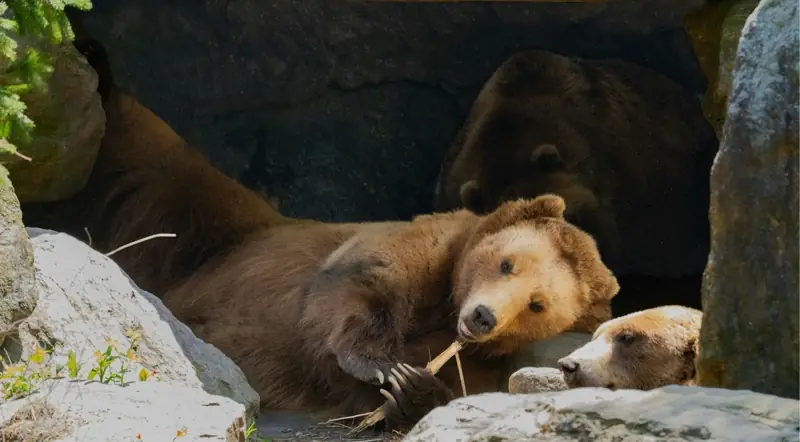 Day 6 · full day west
Grizzly Bear Refuge Tour with Lunch
The whole Day 6 handled: the drive west through Yoho, Takakkaw Falls, Emerald Lake, the Golden Skybridge, lunch, and time at Boo's habitat, instead of 3.5 hours of your own mountain driving.
Featured: Banff Grizzly Bear Refuge Tour with Lunch · ★ 4.2 (55 reviews) · From $239 Check availabilityMaking the Most of Your Time
However long you're staying, the goal is the same: to experience the best of Banff without spending your holiday behind the wheel or stuck in queues. Cluster your days by geography, book the essentials ahead, start early, and leave room for the unexpected.
One Region Per Day
Town, western lakes, Icefields Parkway, eastern loop. Build each day around a single cluster and the driving takes care of itself.
Reserve the Bottlenecks
The Moraine Lake shuttle, the gondola, boat cruises and guided tours. These are the items that sell out and quietly decide whether your plan works.
Be Out by 6 or 7 a.m.
Best light, thinnest crowds, most active wildlife. No other single decision changes a Banff day this much.
Leave Room for the Unexpected
The roadside grizzly, the perfect reflection at Vermilion Lakes, the impromptu detour that becomes the highlight of the trip. Slack in the schedule is what lets those happen.
Planning a Banff Itinerary: Common Questions
How many days you need, what has to be booked ahead, and the access rule that catches most first-timers out.
How many days do you need in Banff?
One day is enough to do a single cluster properly, five days covers every essential without rushing, and seven days lets you add a day trip and build in flexibility for weather. The number that matters more than the total is how you group your days: Banff's attractions fall into four natural geographic clusters — the town cluster, the western lakes, the Icefields Parkway drive, and the eastern loop — and building each day around one cluster is what stops you crisscrossing the park.
Can you see Banff in one day?
Yes, but you have to choose a focus. Option A is the iconic lakes: the earliest Parks Canada shuttle to Moraine Lake, the Rockpile viewpoint, the free Lake Connector across to Lake Louise, then Johnston Canyon via Roam Route 9. Option B stays close to town: the Banff Gondola at opening, Lake Minnewanka for the boat cruise or scenic loop, Bow Falls and Surprise Corner, and the Upper Hot Springs at dusk. Trying to combine both is how a single day turns into a day of driving.
Can I drive to Moraine Lake?
No. Moraine Lake cannot be reached by private vehicle, so any day involving it requires a pre-booked Parks Canada shuttle, a Roam Super Pass, or a guided tour. Book well ahead. This is the single most common reason a Banff itinerary falls apart on arrival. Our Lake Louise & Moraine Lake guide covers the booking system in full.
What do I need to book in advance for a Banff itinerary?
Parks Canada shuttles, the gondola, boat cruises and guided tours all reward advance reservations, especially in summer. If your trip falls between June 19 and September 7, 2026, park entry itself is free under the Canada Strong Pass, but that covers entry only, not any of the activities above. See our 2026 park pass and fees guide for what the pass does and doesn't include.
What should I add on days 6 and 7 of a week in Banff?
Day 6 works well as a day trip west to the Kicking Horse Grizzly Bear Refuge near Golden, BC — about 1 hour 45 minutes each way — to meet Boo, the resident grizzly, ideally on a morning tour when he is most active. Since you drive through Yoho anyway, pair it with any Yoho highlights you missed. Day 7 is best kept for a bigger hike now that you are acclimatized — Sunshine Meadows, the Lake Agnes to Big Beehive circuit, or Healy Pass in larch season — or left flexible as a rest day, a return to a favourite spot, a Canmore or Kananaskis excursion, or a buffer to chase good weather.
What is the single best habit for a Banff itinerary?
Start early. The best light, the thinnest crowds and the most active wildlife all favour early risers, and being at a trailhead or lakeshore by 6 or 7 a.m. transforms the experience. Using Roam Transit and the Parks Canada shuttles is the close second — it spares you the parking nightmares at Lake Louise, Moraine Lake, Johnston Canyon and the gondola.
What should I carry every day in Banff?
Bear spray, layers, water and snacks belong in your day pack every single day. Keep your distance from wildlife — 100 metres from bears, 30 metres from elk and sheep — and never feed or approach animals. Build slack into the schedule too: mountain weather changes fast, and wildfire smoke, closures or a surprise storm can rearrange a day.